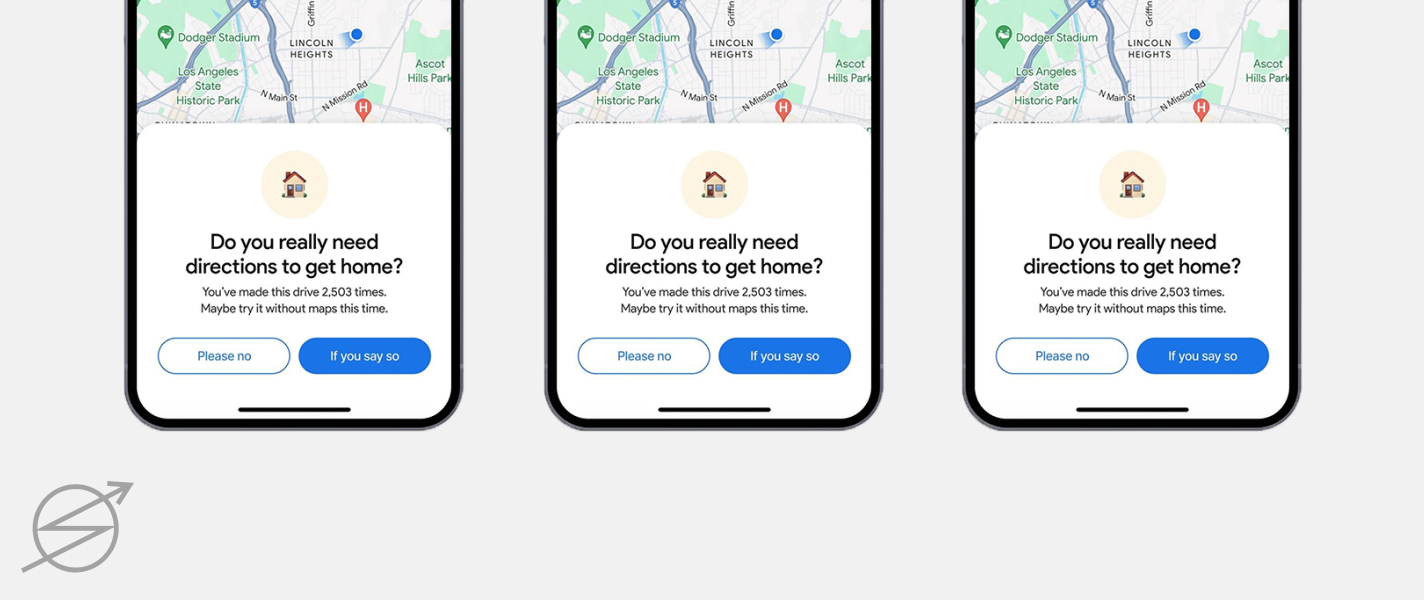

Soren Iverson is a serious designer of serious products. But 1.5 years ago, he started creating hilarious features for popular products like Instagram, Google Meet, Figma, and others. He shared new ideas daily on his social media, accumulating enough concepts to publish two books. His latest, Can You Imagine? 2, was released this April.
We reached out to Soren to discuss how to find insights in everyday things, the common pitfalls of modern apps, and which fake features he would love to bring to life.
You design serious products — your portfolio includes Perch, Quest Terminal, and others. How did you start creating absurd designs of popular apps? Did you really not miss a single day for a year, or did you incorporate cheat days?
I also worked at Square and Cash App! I’ve done a lot of serious work in the past decade, but the satirical stuff has been a refreshing way to think about design. In late 2022, I noticed a lot of companies copying Spotify’s Wrapped feature. I started making fake mockups exploring what it might look like if an app like Starbucks had a Wrapped feature that showed you how many coffees you ordered in the past year.
Shortly after that, ChatGPT came out, and I started exploring what it would look like if the “persona” of ChatGPT lived as an assistant in iMessage, a designer in Figma, or a guest on a Reddit AMA. From there, I started mashing apps together (like iOS group alarms, which combine basic alarm functionality with Figma’s multiplayer). After that, I made different “unhinged” product features like Uber Hotbox option, Hinge feature to preview your date in AR, and more. The rest is history.
I’ve been making an unhinged UI daily since January 3rd, 2023. It’s been 514 days and I’ve never missed a day. I preschedule concepts when I’m on vacation and have designed them even on days when I’m sick in bed and have a fever. No cheat days.
In your ideas, you highlight the weak points of digital products and their users — filters, lies, fraud, impulsive purchases, internet addiction. In your opinion, what is the biggest drawback, the biggest sin, and the biggest potential of modern apps?
This is a tough question as it depends on which app we are talking about. I think a sin we can all agree upon is making it hard to unsubscribe to something. For example, you have to visit a brick-and-mortar location of Planet Fitness to cancel your gym membership. They have an app. It’d be easy for them to implement an unsubscribe feature, but they would never do this because it would hurt their bottom line. I’m generally a proponent of freedom of choice + open markets, but I think a universal unsubscribe flow would be pretty great for customers.

How do you choose the apps on which you base your concepts? Are they products you use in your daily life, or do you specifically download them to find inspiration for your next idea?
It varies a lot. I try to use a mix of popular apps as well as ones I use regularly. Generally, I find concepts are more viral when based on apps people are familiar with. If I satirized a startup, no one would understand. However, if I make fun of Tinder, most people have a general understanding, even if they haven’t used the product before.
Are there any features among your ideas that you would really like to see in real products? If so, which ones?
My favorite idea will always be the Hinge Feature to preview your date in AR. The idea of doing an “at-home try on” of your date is hilarious to me. It would take a fair amount of engineering work to build tech that allows you to take a 3D model of yourself, upload it into an app, and then allow people to preview that model in their home, but if it existed that would be hilarious. If someone reading this knows how to build it, please do.
Have any app developers contacted you to implement the designs you create?
Yes! Recently a developer turned my LinkedIn feature that summarizes long posts with AI into a Chrome extension, it’s pretty fun! Other times, I’ve seen startups take aspects of my work and transform them into real features.
I am an investor in a company called Clearspace, and we created a feature where you have to do pushups to get more screen time. This idea was born from a conversation I’d had with the founders. Generally, I’m hopeful more people will make apps that are fun and entertaining in addition to providing some sort of utility.
I have often seen features and apps that are very similar to what you come up with. For example, the Instagram usage timer, the ability to notify all friends about a new Facebook post, puzzles to solve before turning off an alarm, and Viber promising to introduce a feature that summarizes chat content. How many unusual features and app designs do you think will appear in the near future? And what role will AI play in this?
It’s hard to say. I saw a feature a few days ago where you have to literally say your one time password to your Amazon driver. People tagged me thinking it was a concept I had made. As a company pushes to continue to grow later in its lifecycle, its product output can at times be more unhinged as a way to drive engagement. As for how AI ties into this, I’m not sure. I do think broadly speaking we’ll see more and more AI functionality rolled up into products (like search on Instagram).

Do modern app developers have (self-)irony? And do products in general need it — both new ones and those that have been on the market for a long time?
If I’m using a product (like, say, Instagram), I probably don’t want it to have too much personality. Apps are tools at the end of the day, and the minute a tool tries to have a personality, it can alienate and frustrate people.
I think how apps are marketed is a much riper field for satire, but the underlying functionality probably shouldn’t change too much. That said, I do wish more apps were fun. I’ve been working on some apps recently and am consciously trying to make products people find delightful rather than just serving a functional purpose.
AI models like ChatGPT and Midjourney seem like a big and relevant field for reflection, but I haven't found any ideas from you involving them. Why?
I’ve done a few ChatGPT concepts, but generally, Midjourney and ChatGPT are things I don’t use very much, so it’s harder to satirize. I’m not anti-AI, but I don’t have enough context or familiarity to really make fun of these apps.
Would you rather live in a world without apps or in a world where apps can expose your true intentions and actions (scrolling Instagram instead of working, lying about your interests on Tinder, etc.)?
A world where apps probably expose your true intentions. I’m trying to imagine a world without apps, and it’d be tough for me to have a job in that world.