
Stefan Sagmeister is one of the most prominent graphic designers, storytellers and font conceptual typographers of today. His works shape the industry and make us revise the attitudes to the world’s visual codes, messages, and missions on so many levels.
Currently, Stefan is putting his talent in various projects, including his own collection of good-fosuced garments, Sagmeister 123, or reviewing visual projects from around the globe on his Instagram page.
Ahead of Stefan participation in our Lastivka conference dedicated to Ukraine’s creative minds’ adaptation on the global market, we approached him with five questions and learned:
- — why it was the Kyiv Crematorium that impressed him so much
- — if the attitude to beauty is still evolving
- — what kind of feedback is super destructive
What is the last thing—basic, strange, or even ugly—you found beautiful and was impressed by? Whу?
It’s neither basic nor strange or ugly: the most beautiful thing that impressed me lately is this car that was delivered to me this week in Florida. I don't think it needs much of an explanation about the why.
Could you name one thing from the Ukrainian visual domain (or any other one) that you think is beautiful?
When I was in Kyiv, we visited the Kyiv Crematorium, and its overall shape and materiality just blew me away. Very beautiful.
Can beauty be taught and explained?
Yes, it can be taught and it needs to be explained. There needs to be a goal in place for the piece to become beautiful. Without that goal, things might become functional, but they won't be beautiful. Functionality by itself can never be enough, it is ultimately inhuman.
Do you see any changes in how the world perceives beauty now?
Yes, beauty is certainly taken more seriously again. You see this in how often the term “beauty” is used in recent books and publications (a clear upwards trend reported by Google who digitizes millions of books) but also in the fact that leading architects like Jaques Herzog from Herzog DeMeuron or Renzo Piano talk very openly about the need for beauty again.
What drives you to spare your time to give feedback on people’s works on your Instagram?
I had gone to a salon of the late artist Louise Bourgeois, who allowed every Sunday evening up to 12 people to come to her living room. Everybody needed to bring work, which she then critiqued. She was ruthless! And of course, incredibly generous too, it is quite a gift to be giving up an evening every week in order to do this.
In the studio, we had received a constant stream of requests from people who asked to come in and look at their portfolios. I simply copied her idea and conducted a salon, where up to 12 designers came into our studio on Monday evenings.
This worked well for many years, until my travel schedule made it impossible. Doing the critiques on Instagram has the significant advantage of the audience being much larger—so other people might receive a benefit from the critique too.
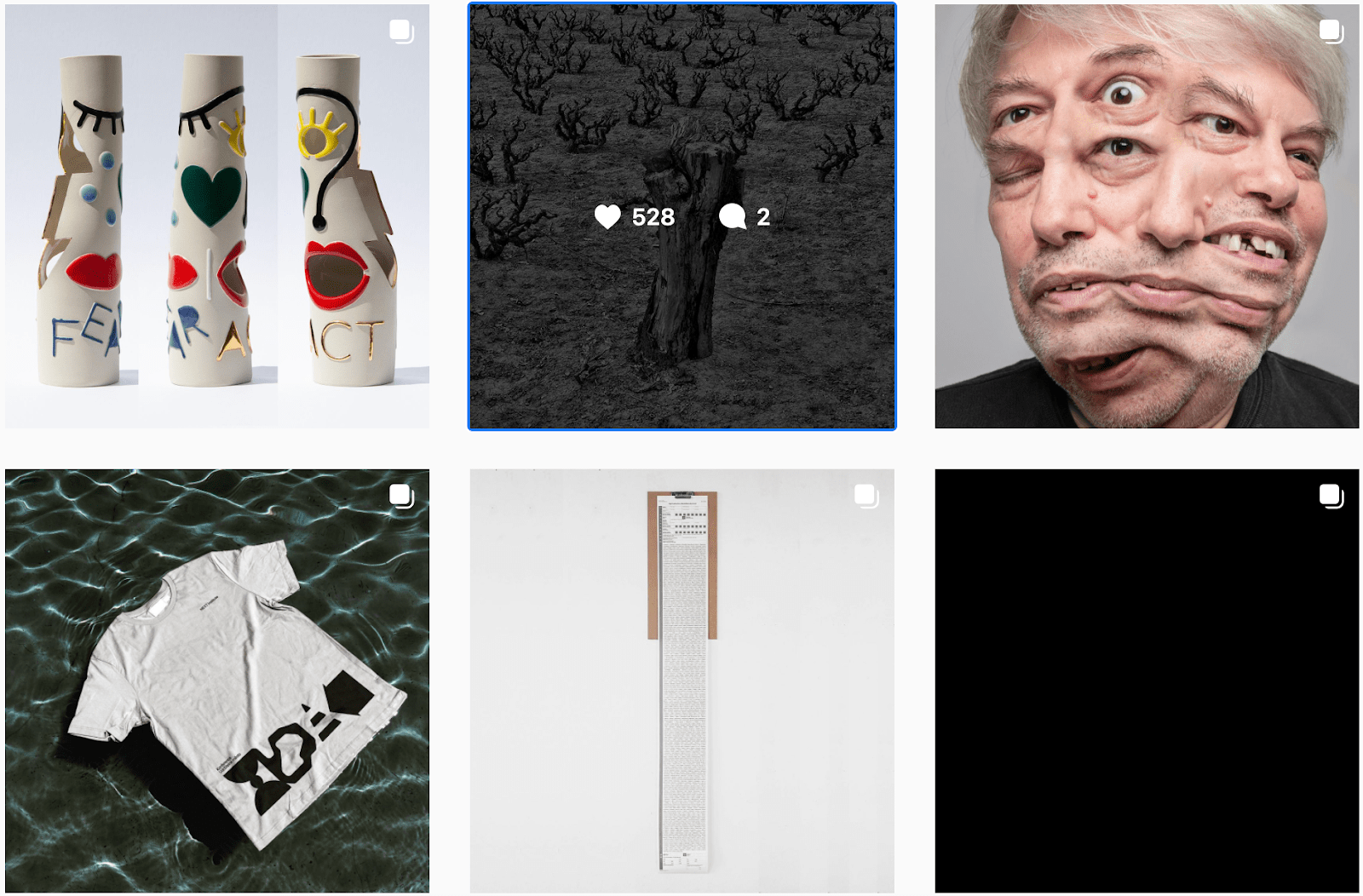
I have recently heard back from design faculty members that they follow me in order to make their own reviews of student work tighter. I got a big kick out of that.
I hope I write my reviews in the way I like to be critiqued myself: with the best outcome for my piece and myself in mind. If my work is reviewed in a snarky or scathing manner, I am hurt and sadly learn nothing—a double negative.