
Saturday Night Live just turned 50, and it’s not only its longevity that makes it special. A conservative format like a late-night show still manages to stay relevant today, even in the era of Chicken Shop Date and Hot Ones. Among countless viral TikTok sounds, many come from SNL. And globalization in the form of the FYP feed did its thing — so now we all know a little about the show, whether we want to or not.
Although people often say SNL stopped being funny, the show keeps going. Its creator, Lorne Michaels, even likes to joke that everyone in the entertainment industry has two jobs: their own, and figuring out how to fix SNL. Even J. D. Salinger once complained about the show in his letters.
Despite this love-hate relationship, Americans continue to watch SNL. Below, we’ll look at how it has remained a permanent part of American pop culture for nearly 50 years.
How it all began
The reason SNL came to be was prosaic — NBC needed to fill an empty late-night time slot. Instead of airing reruns of President Jimmy Carter’s show appearances, NBC president Herbert Schlosser suggested creating something new. He wanted the show to be “young and bright,” with a distinct sound and visual style, based in New York. And most radical of all — it had to air live.
Producer Lorne Michaels took on the challenge. Michaels liked to say that “the music had changed,” meaning culture itself had shifted. He wanted his show to capture those changes. SNL was meant to look as if “the adults had left, and the kids had taken over the studio.” Its aesthetic had to reflect the times. Since New York in the 1970s was on the brink of bankruptcy, the studio leaned into a vibe of urban decay. Though it was rooted in New York, Michaels reminded his team that audiences in every state would be watching.
The structure of the show (mostly unchanged since the 70s) looked like this: a cold open, a monologue by the guest host, and comedy sketches alternating with two musical performances. By 1975, the first cast had formed: Gilda Radner, Jane Curtin, Chevy Chase, John Belushi, Dan Aykroyd, Laraine Newman, Garrett Morris, and George Coe.
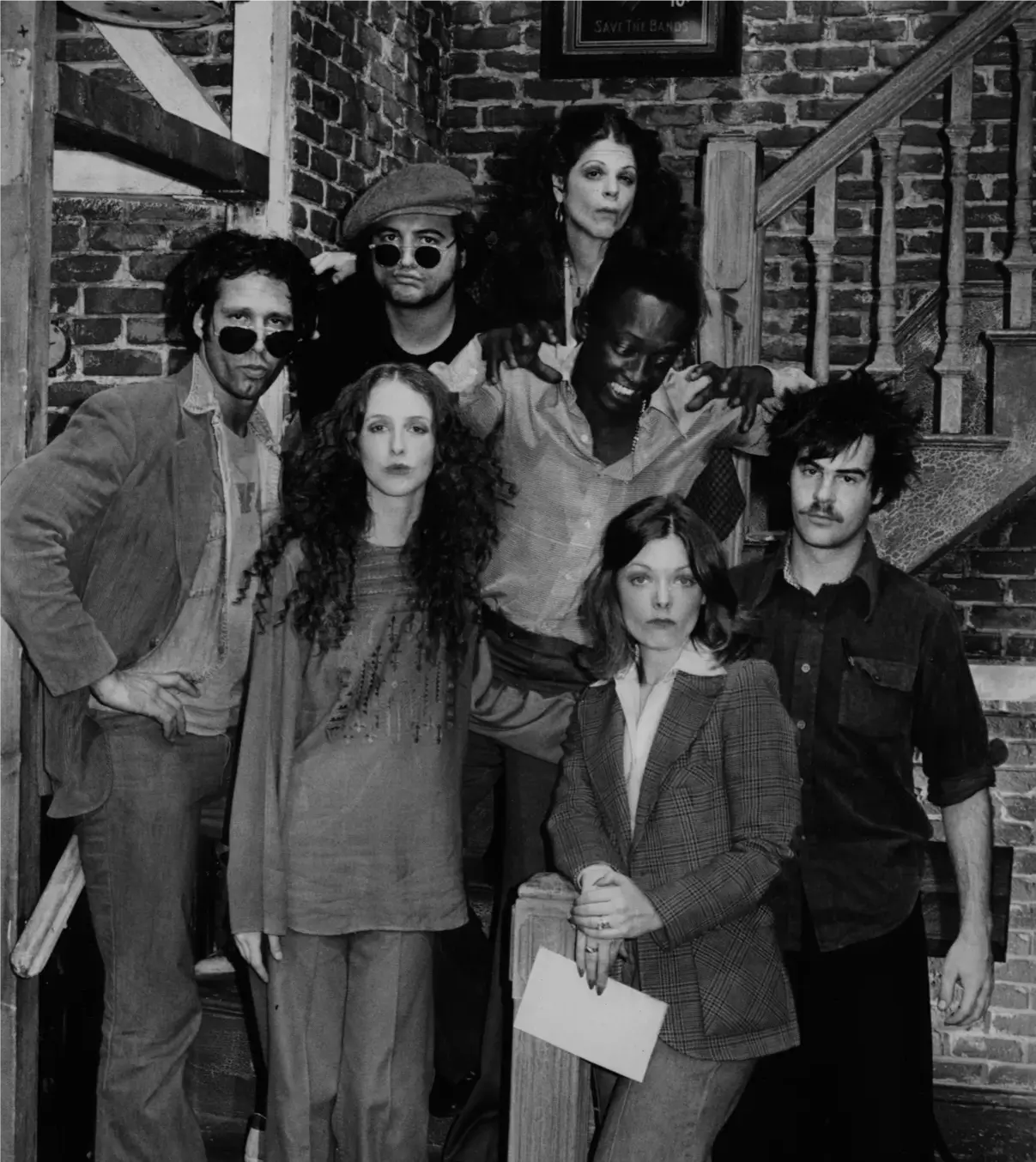
The first cast of SNL. Source: newyorker.com
Michaels first sought not actors, but writers. He wanted each episode to feel like an issue of The New Yorker, with each writer having a recognizable voice. Comedian John Mulaney recalled it as the feeling that, for a few minutes, NBC was completely yours — you could do anything you wanted. It’s no wonder many SNL “alumni” became directors.
Still, though the show aimed to elevate writers, it wasn’t exactly paradise for them, given the brutal schedule. Writing began on Monday, and scripts were due by Wednesday. Then the best were picked and rewritten multiple times before Saturday. In the docuseries SNL50: Beyond Saturday Night, Bob Odenkirk (Better Call Saul) said the exhausting pace stopped him from enjoying the work. One former writer even joked that he still has nightmares about working on the show.

I’m on SNL, and you’re not: why the show still matters
Though Michaels is Canadian, SNL is all about American-ness. Critic Naomi Fry once said that when she moved to the U.S., she watched SNL to understand what people were talking about. In the documentary Ladies & Gentlemen… 50 Years of SNL Music, Michaels even said that no star is off-limits to the show — it’s far too opportunistic for that. They want to book anyone vibrant and interesting.
A few reasons SNL remains iconic:
#1. Musical guests. SNL is like the magic mirror from Snow White. If you asked: mirror, mirror on the wall, who’s the most relevant now of them all? — It would show you the night’s guest. For musicians, landing on SNL has always been proof that you made it or you will make it. That’s why Sabrina Carpenter once shouted during her performance: I’m on SNL, and you’re not!
The show doesn’t only book chart-toppers, but also artists who capture the spirit of the times. That’s why SNL was the first to bring a hip-hop group to national TV: The Funky 4+1 in 1981. Later, hip-hop acts became regular guests. The show also spotlighted underground artists like punk band FEAR, proving that punk could be played not just in basements, but live on television.
Since SNL is truly live, musical performances have sometimes damaged careers. Ashlee Simpson famously walked off stage mid-song. Sinéad O’Connor tore up a photo of Pope John Paul II during her performance (for her, the backlash meant she did the right thing). And Lana Del Rey’s shaky 2011 debut kept her from performing live on TV for years.
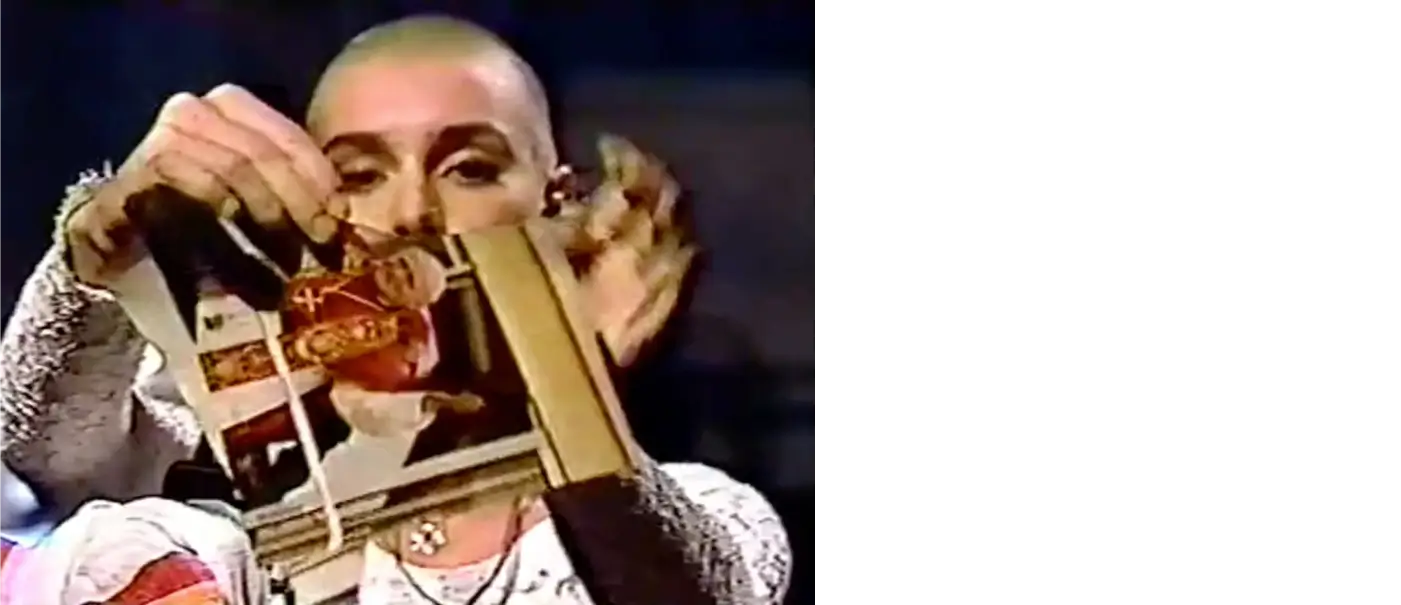
Source: nytimes.com
#2. Celebrity hosts. Since the show doesn’t have a permanent host, each episode revolves around a guest host + a musical act. Usually, the host is an actor, but not always. For example, in an episode hosted by Jacob Elordi, musical guest Reneé Rapp also joined a sketch. Sometimes one person does both — like Charli XCX, or Timothée Chalamet in a recent episode.
SNL has also welcomed athletes, politicians, and other public figures. The latter often use it to raise their profile and appear more relatable by poking fun at themselves. Donald Trump hosted twice, the last time in 2015, just before the election. That raised the question: Does giving someone a platform equal helping them? Michaels defended the choice, saying they wanted to warn the audience that this man was running for president. Another controversial host was Elon Musk in 2021.
#3. Opening monologues. While working on The Beautiful Phyllis Diller Show, Michaels noticed how important Diller’s interview segments were for building intimacy with viewers. That’s why he wanted every SNL show to start with the host addressing the audience.
These monologues usually follow a formula: talk about something relevant now (since all guests have recently done something noteworthy). But they’re never straightforward success stories — hosts always poke fun at themselves. Charli XCX, for instance, thanked the one constant in her career: Auto-Tune. Dua Lipa referenced the “go girl, give us nothing” meme.
#4. Weekend Update. This long-running segment is called “an institution within the institution.” It’s been around since the start, offering satirical recaps of the week’s news. Today it’s hosted by Michael Che and Colin Jost. Their sketches are consistently well-received, thanks to their contrast: Che the sarcastic, Jost the straight man. Every Christmas, they write each other’s lines as a surprise — so the jokes are new not only to the audience, but to them too.
#5. Sketches that capture the moment. While some may feel a bit hello, fellow kids, SNL always tries to stay current. Looking back through its archives is like flipping through a cultural time capsule. Recent sketches that nailed the zeitgeist include a parody of influencers and No More Slay, which runs through every trend in minutes. Politics also remains a frequent subject.
#6. A whole shared universe. Just three episodes in, SNL had already created its inside jokes. Over time, catchphrases like more cowbell entered everyday language. The point of these callbacks is to make viewers feel like part of a community when they recognize the reference. For example, in a sketch about a bridesmaid’s wedding speech, her situationship Domingo interrupts to sing a dramatic apology. Later, Domingo even appeared at Sabrina Carpenter’s concert, where she jokingly arrested him for being “too hot.” In a recent anniversary episode, Domingo showed up again — this time with his brothers.
#7. An institution. The show’s cult status was solidified after its fifth season, with many cast members becoming household names. Among its alumni: Tina Fey, Pete Davidson, Andy Samberg, Jimmy Fallon — the list goes on. But there were also misses: Jim Carrey and Stephen Colbert both failed to make it through auditions.
Michaels has remained SNL’s producer from 1975 until today (except for a brief break in the 80s). He’s often seen as a kind of fairy godfather of the industry, frequently producing projects by SNL alumni, like Tina Fey’s Mean Girls. Susan Morrison, author of Lorne: The Man Who Invented Saturday Night Live, noted that many cast members love impersonating Michaels. Some parodies even became whole characters, like Dr. Evil in Mike Myers’ Austin Powers films, or Jack Donaghy in Tina Fey’s 30 Rock.
Like any institution, SNL has its quirks, even outdated ones. For example, they still use cue cards instead of teleprompters, and all script changes are still done on paper.
How SNL was adapted abroad
The format of sketches + music is flexible enough to be adapted internationally. Over the years, Egyptian, German, Spanish, French, Finnish, Polish, Japanese, and Korean versions have appeared. Some failed because they recycled original SNL sketches — the Spanish version lasted only 12 episodes. But the Korean version became one of the most successful, since it adapted the format rather than copying it.
As for Ukrainian late-night shows, one could almost speak of a curse: the format never resonates the way it does abroad. This is due to many factors — from host choices to writing. Still, shows like Tykhyi Vechir (A Quiet Evening) with Olena Kravets have seen fairly good numbers.