
13 minutes. That’s how long the standing ovation lasted after the premiere of The Substance at Cannes. It’s a satirical horror-thriller about how society objectifies women and pressures them to reject themselves.
The Substance tells the story of Elizabeth Sparkle (Demi Moore), a former TV star who, after being fired from her show, receives a mysterious substance. It creates a younger version of Elizabeth named Sue (Margaret Qualley). From then on, the two women take turns living one week at a time.
In Ukrainian cinemas, The Substance premieres on October 10. Skvot spoke with the film's director, screenwriter, and producer, Coralie Fargeat, who won the Best Screenplay award at this year’s Cannes Film Festival.
In the interview, we discussed:
- — how The Substance reflects the director’s own crisis of turning 40 years
- — why Coralie Fargeat chose Demi Moore for the lead role
- — the meaning behind the film’s nudity scenes
- — whether the mysterious substance in The Substance is a reference to Ozempic
- — why the film features so much violence and blood
The Substance feels like a deeply personal project. Elizabeth’s story is a hyperbolized cinematic take on a crisis nearly every woman experiences. Did you go through it yourself?
Yes. In fact, that crisis is what led to the film. When I turned 40 (the director is now 48 — ed.), I thought: «This is the end. My life is over. I will be erased from society». It was an incredibly depressing period in my life.
I felt the urge to express what it’s like to constantly compare yourself and your body to other women, to base your self-worth on that comparison. And I thought, «Okay, now is the time to use the horror genre». These thoughts were suffocating me, and I had to do something with them — otherwise, they would have destroyed me. The violence in the film became a way to externalize all the inner aggression I felt.

Demi Moore is no stranger to these feelings, either. She has openly spoken about the brutal battle she fought with her body for years, trying to achieve perfection. Was this experience part of why you cast her as the older Elizabeth?
I was actually surprised when I found out Moore was interested in the project. But then I read her memoir Inside Out, and everything clicked. When I finished the book, I thought, «Wow, Demi is truly incredible!» Through that book, I discovered a completely different side of her, one I hadn’t known from her films.
She took a lot of risks throughout her career. She built herself from the ground up. Demi made bold choices in an industry dominated by men. At the same time, she worked on herself to feel comfortable in her body, accepting the aging process as it is.
I think the journey she went through to reclaim her inner strength allowed her to be vulnerable on screen — because that vulnerability could no longer hurt her.
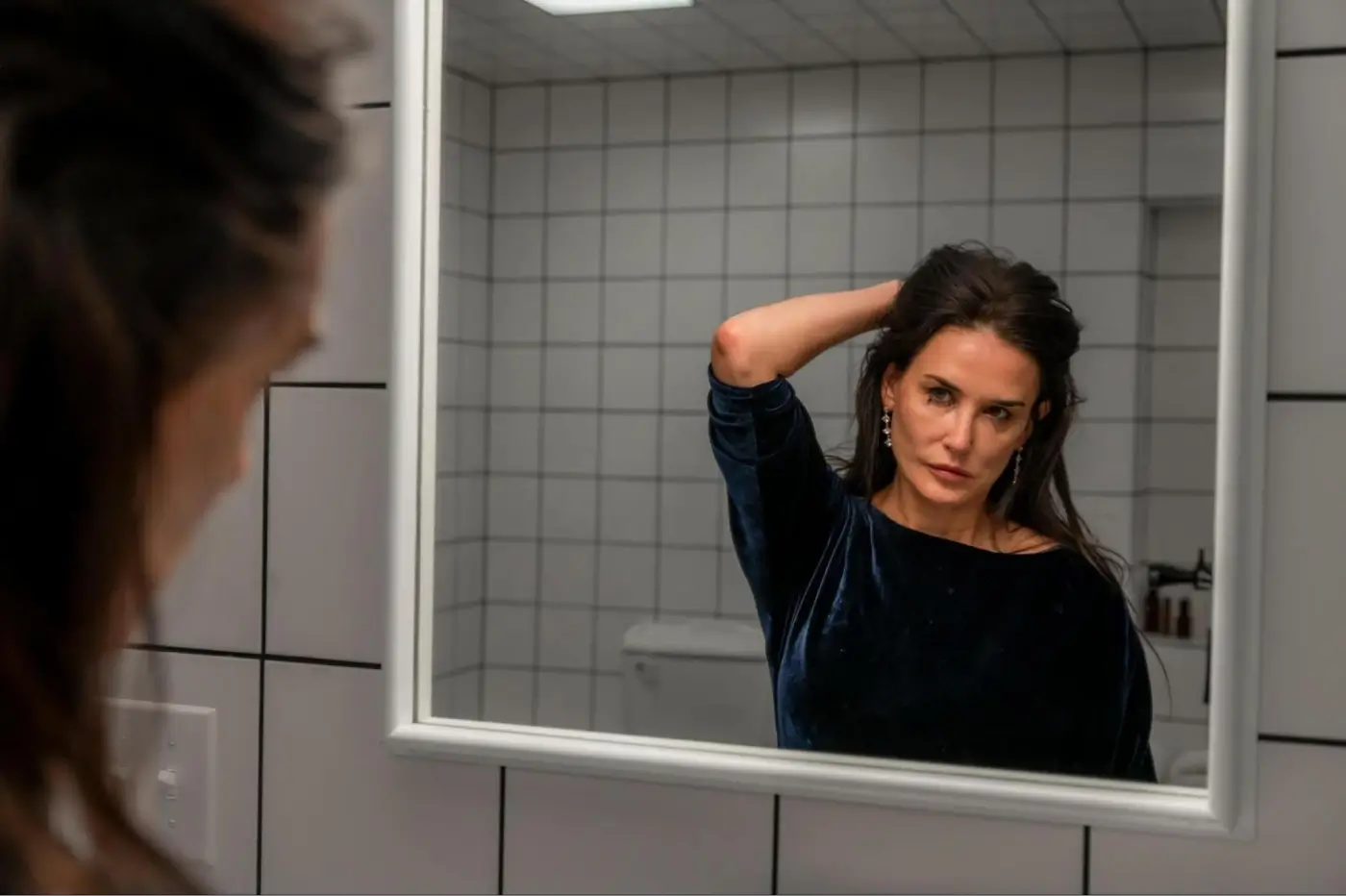
A scene from the movie The Substance
And it has certainly paid off for her: some say her performance in The Substance could earn her an Oscar nomination — the first in her long career.
I’m thrilled that her performance is being recognized so highly. She took a huge risk starring in an independent horror film in France with a wild script.
One of those risks — both for Moore and Margaret Qualley — was the nudity scenes, right?
We discussed them extensively. Every aspect was carefully planned so that the actresses felt as comfortable as possible. The nudity in The Substance serves a meaningful purpose. There are two distinct types of nudity in the film.
The bathroom scene with Elizabeth symbolizes her relationship with herself. It’s a space where no one else is watching her. She simply examines herself critically in the mirror. There’s nothing sexualized about it.
The second type of nudity is the opposite — it’s tied to the external world and its gaze. It’s about reshaping yourself to fit an idealized, hyper-sexualized image. I’m referring to the scene where Sue dances naked, her image multiplied across numerous screens. With that scene, I wanted to say, «This is a false promise». Sue’s relationship with herself is an endless search, a constant attempt to be what others expect her to be.
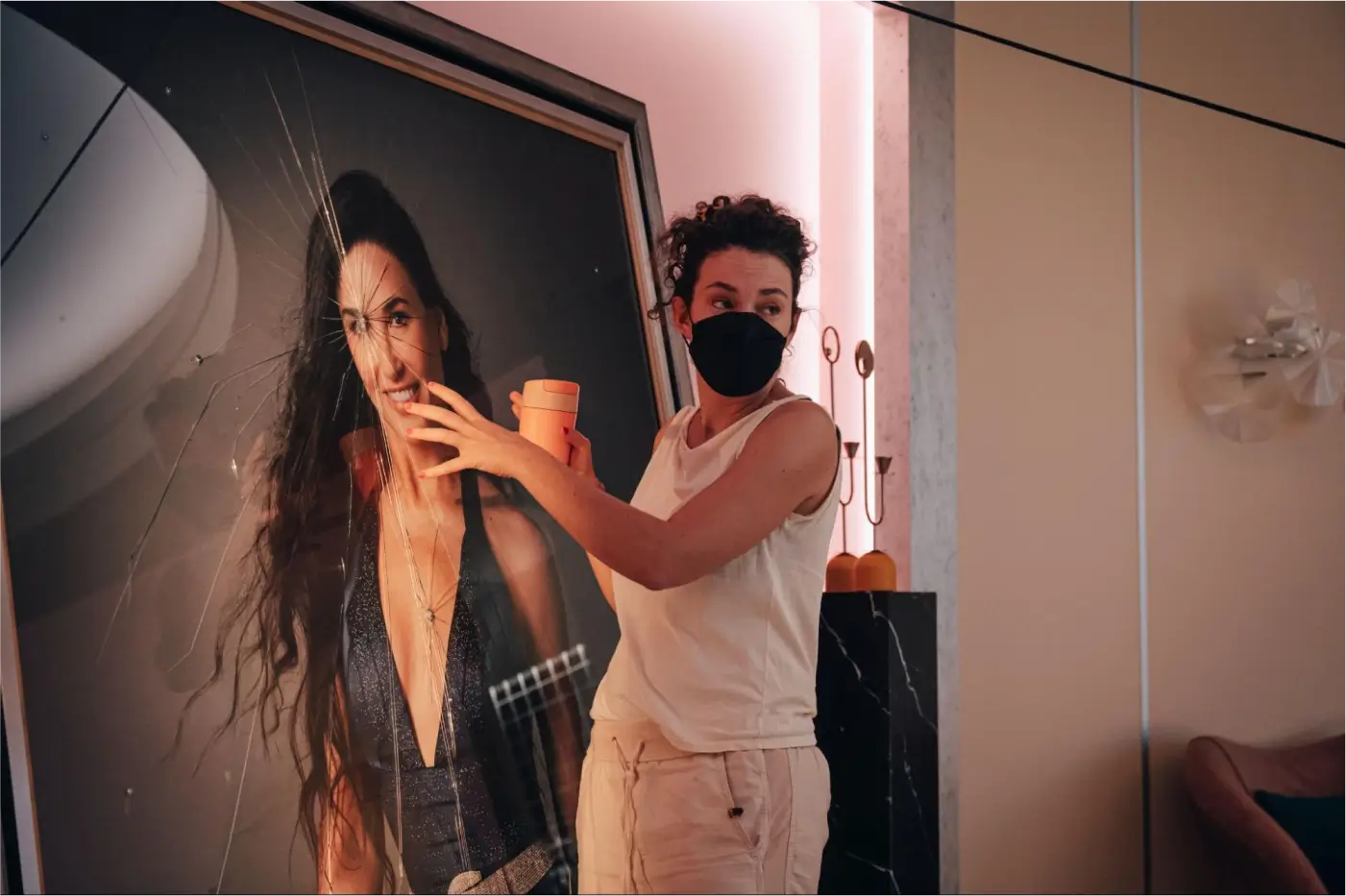
A backstage of the movie The Substance
Some viewers have drawn parallels between the substance in The Substance and Ozempic. Was that intentional?
No. I wrote the script about 5 years ago — Ozempic didn’t exist then. But we’ve had plenty of similar weight-loss and appetite-suppressing drugs in the past. Women took amphetamines to stay thin or drank powdered supplements that promised to replace food entirely.
Ozempic is just the latest version of something that has been around forever — the search for a «magic pill» for eternal beauty and youth. The fact that the film resonates with people is great. But at the same time, it tells me that, unfortunately, the problem still exists. And it’s bigger than just aging — at any age, we can find something «wrong» with ourselves that makes us feel monstrous. Your appearance defines you and your self-worth.
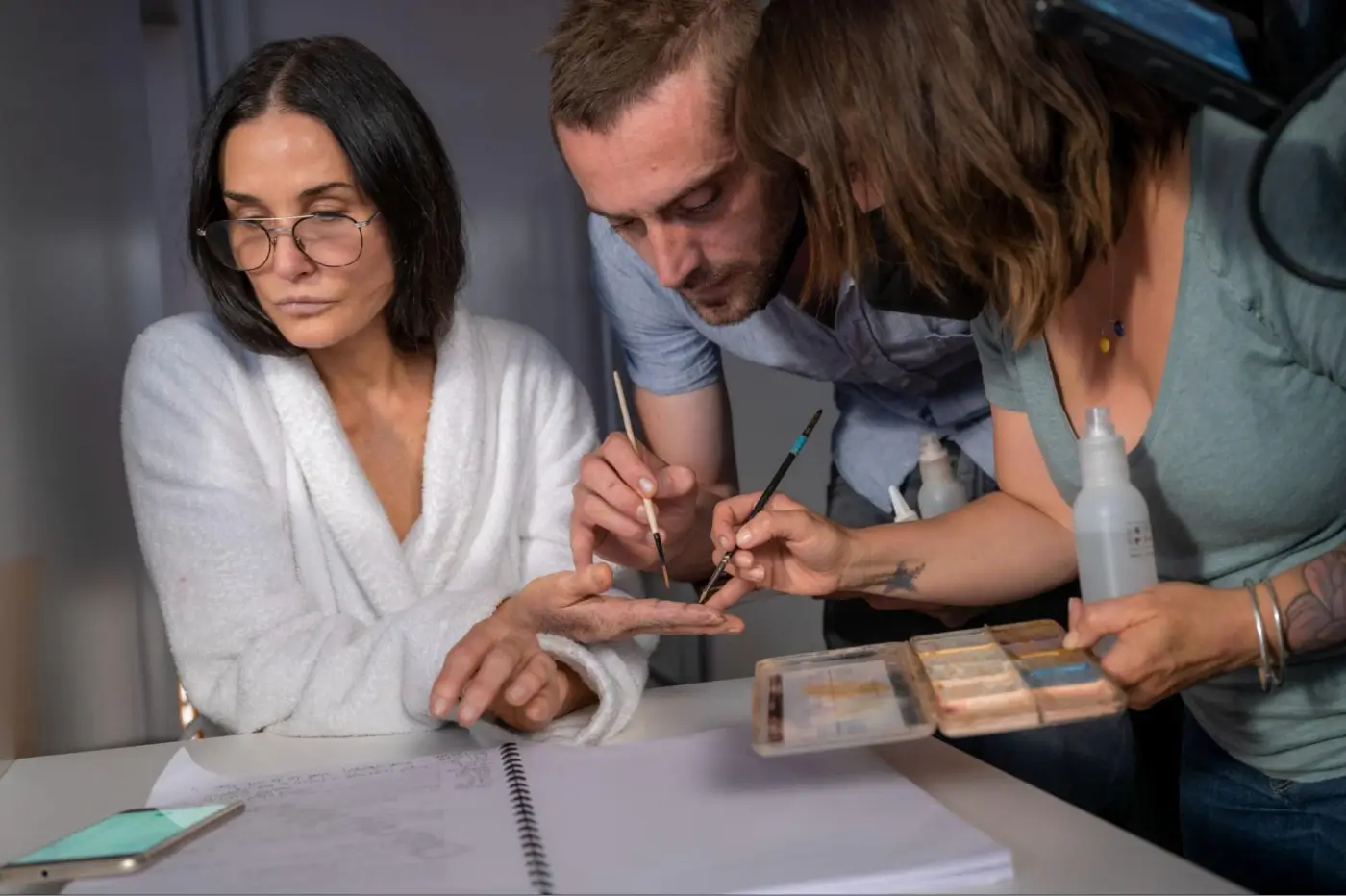
A backstage of the movie The Substance
I wanted to show that when you’re a woman, your body is anything but a neutral object in public space. It is constantly scrutinized, evaluated, fantasized about, and sexualized. And you can’t ignore it. This also dictates how much we are allowed to participate in society. This inequality is deeply ingrained. And the weapons we turn against ourselves are incredibly powerful.

A scene from the movie The Substance (hereinafter)
For me, it was important to portray this reality, which is still taboo to talk about. To bring it out into the open — with all the guts, blood, and violence — and say, «Look at this!» I thought that if I could create something meaningful, it could also be a form of release.
And was it?
To some extent. The film was meant to express everything I wanted to say — without any restraints. Because this film is about the violence of control, about how women are forced to be delicate. Think of the past, when women had to wear clothes that constricted them. I wanted to tear all of that apart in a brutal, uncompromising way. Because for real change to happen, we need an earthquake, a tsunami. We can’t just touch on this subject — we have to change the very foundations of society.

Ironically, when Elizabeth undergoes her final transformation — becoming completely deformed and monstrous — it no longer matters to her how she looks. In fact, it’s the only time she looks in the mirror and seems to like what she sees. That’s the moment she finally feels she deserves to step into the world, regardless of her appearance.
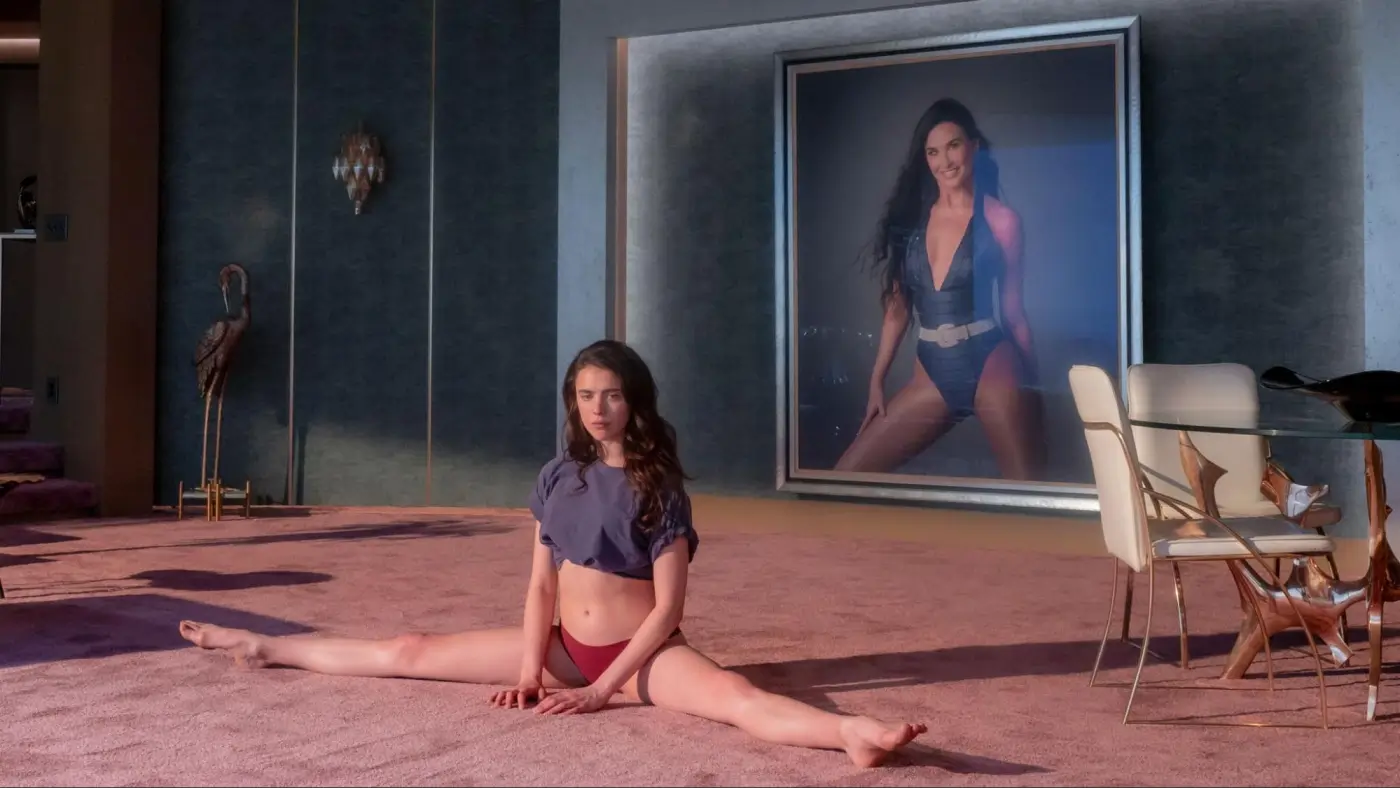
We hide behind our polished smiles. But I wanted the character to break free from those hidden anxieties. In the film, the audience represents all of us as a society. They scream at Elizabeth, they hate her. It’s about how cruel the reaction can be. And the fact that the only real moment of relief for the protagonist comes when she no longer has a body — I think that says it all.
After making The Substance, I felt free from that pressure. This journey was an attempt to embrace who I am. Yes, it was a release — but sometimes, there are relapses. I still deal with all the conflicting voices in my head, the ones embodied by the two characters in my film. But their voices are getting quieter and quieter.